Cases of road subsidence were found in Hong Kong in the previous years, which led to social concerns about underground voids and the impact on road infrastructure. Most of the voids were caused by water leakages from the underground high-pressure water pipe network. Therefore, the Water Supplies Department implemented a risk-based asset management strategy for the replacement and maintenance of the underground high-pressure water pipes. With its high-density underground utilities, the maintenance work of underground infrastructure is particularly challenging in Hong Kong, which required the use of advanced imaging and diagnostic technologies.
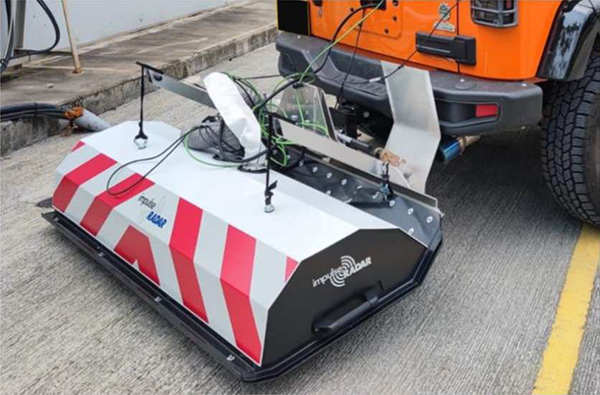
With the support of Highways Department, Water Supplies Department (WSD) and sponsorship from the industry, LSCM and the Hong Kong Polytechnic University collaborated to develop seamless positioning and imaging techniques for the early detection, severity classification and diagnosis of underground voids. Multi-channel ground-penetrating radar arrays and advanced signal processing techniques were utilised to create sensitive and specific detection methods tailored to various void sizes.
The testing of the technologies took place at Q-Leak, WSD’s underground water mains leak detection training centre, and were proven effective. They are suitable for deployment in different districts in Hong Kong and other regions facing similar challenges. |